
Complete product guide
The Complete Child Safety Buying Guide
Safer operating choices, installation practices and family-friendly window planning.
Understand the essentials
A closer look at child safety and the decisions that shape the result.
Accessible cords and loops can create serious hazards for young children. Safer window-covering planning prioritizes cordless or motorized operation, secure installation, proper tension devices and furniture placement that keeps windows and controls out of reach.
Why homeowners choose them
Four reasons this guide deserves careful consideration.
01
Cordless first
Choose products that operate without accessible cords whenever practical.
02
Motorized convenience
Automated systems combine safer control with easy daily use.
03
Secure installation
Mount brackets, tension devices and stops exactly as required.
04
Safer room layout
Keep cribs, beds, chairs and climbable furniture away from windows and controls.
How it works
How child safety are designed and built
Child safety is shaped by the complete system, not only the fabric. Headrails, lift controls, continuous loops, tension devices, hold-downs and mounting height all matter. Products should be selected and installed in accordance with current Canadian requirements and manufacturer instructions.
Compare before you choose
How this option differs from nearby alternatives.
Cordless shades, shutters with internal tilt, wand-controlled vertical blinds and motorized systems can reduce accessible cords. Some products may still contain internal cords or require specific safety devices. Product suitability should be confirmed for the room and user.
Where it works beautifully
Consider the room, exposure, privacy needs and how often the treatment will be adjusted.
01
Nurseries
Use cordless or motorized treatments and keep furniture away from windows.
02
Children’s bedrooms
Reassess controls as furniture and room layouts change.
03
Playrooms
Choose durable, easy-to-operate products without accessible loops.
04
Family living spaces
Secure all controls even where children are only occasional visitors.
Questions, answered
Frequently asked questions
Clear, practical guidance based on the questions homeowners ask most often.
Are cordless shades completely cord free?
They may have no accessible operating cord, but internal lift cords can still exist within the product.
Are continuous loops safe?
They require approved tension devices and correct installation. Cordless or motorized options are generally preferred around children.
Are motorized shades safer?
They eliminate many manual cords and loops, but the complete installation still needs to be secure and properly maintained.
Can I cut an existing cord shorter?
Do not alter a safety system without manufacturer guidance. Modification can create new hazards or affect operation.
Where should cribs and beds be placed?
Keep them away from windows, coverings, cords and climbable access points.
Do safety rules apply to older products?
Older products may not meet current requirements. A professional assessment can identify replacement or upgrade options.
Are shutters child safe?
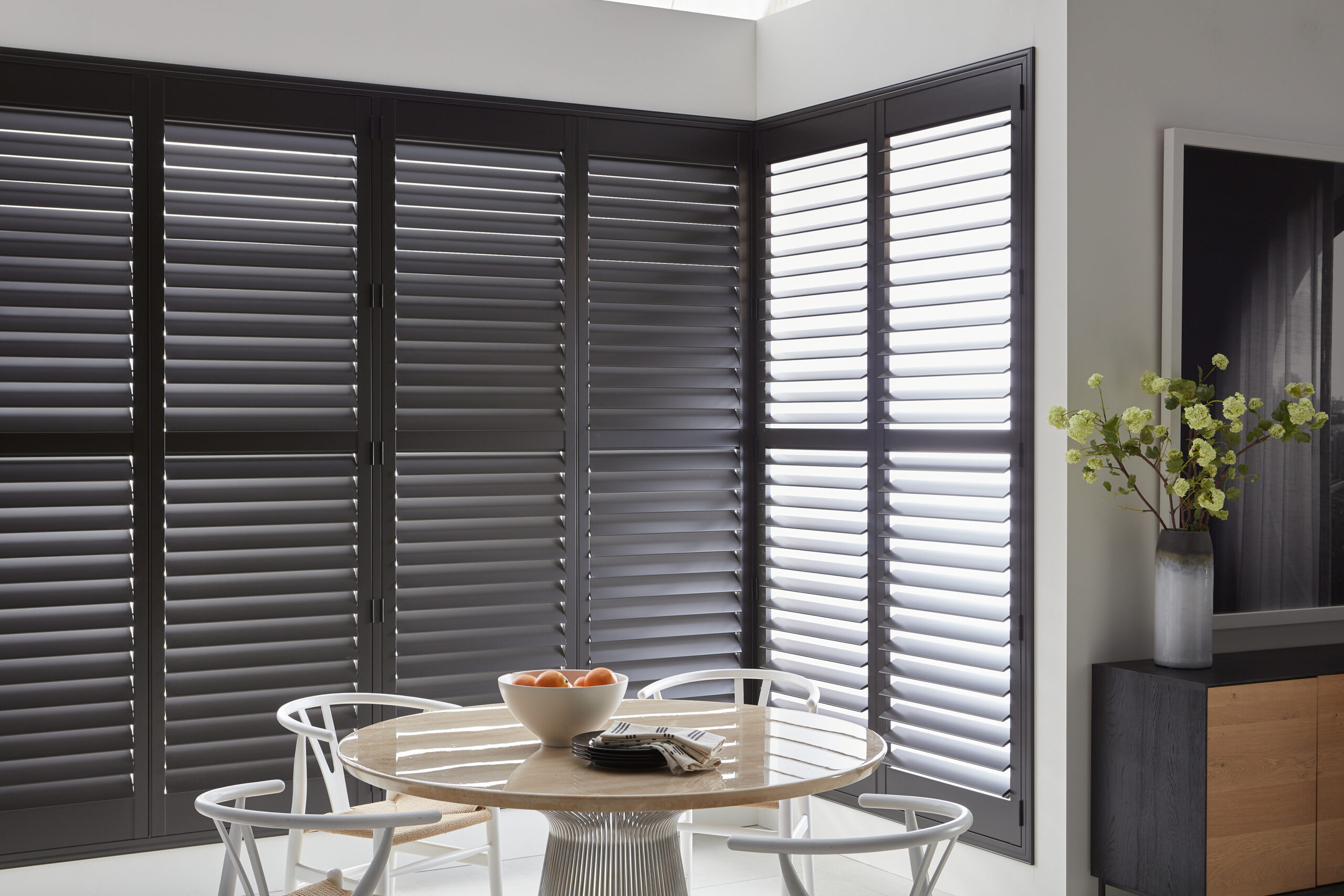
They avoid lift cords, though panels, hinges and tilt components still require proper installation and supervision.
What should I inspect regularly?
Check tension devices, loose cords, damaged loops, detached stops, unstable brackets and nearby furniture.
Can retrofit safety devices fix every product?
No. Some older designs are better replaced with current cordless or motorized products.
Where can I verify requirements?
Use current Canadian government guidance and the manufacturer’s installation and safety instructions.
Care & longevity
Protect the materials and the mechanism.
Inspect controls and brackets regularly, replace damaged components immediately and reconsider the room whenever furniture moves. Do not rely on temporary knots, clips or homemade modifications.

Guidance made personal
Ready to choose with confidence?
Meet with The Blind Shop design experts to compare materials, control options and performance in your own space.