
Complete product guide
The Complete Metal Blinds Buying Guide
Slim aluminum slats with crisp tilt control, durable finishes and efficient operation.
Understand the essentials
A closer look at metal blinds and the decisions that shape the result.
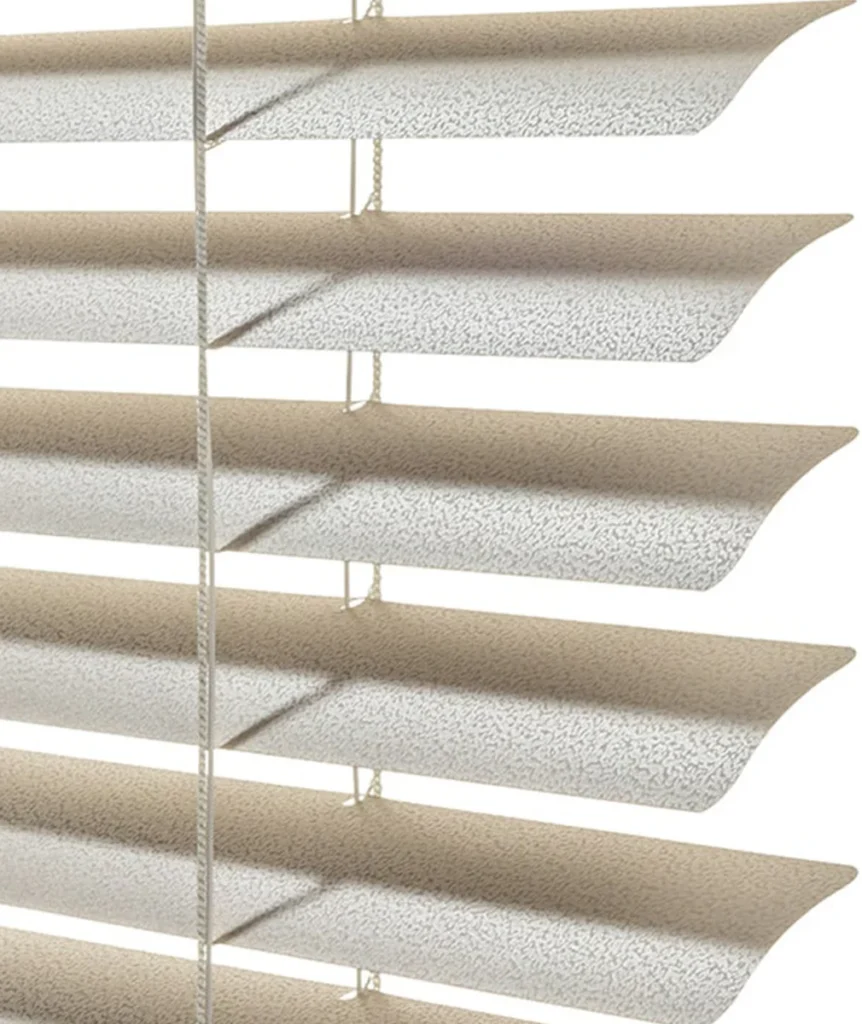
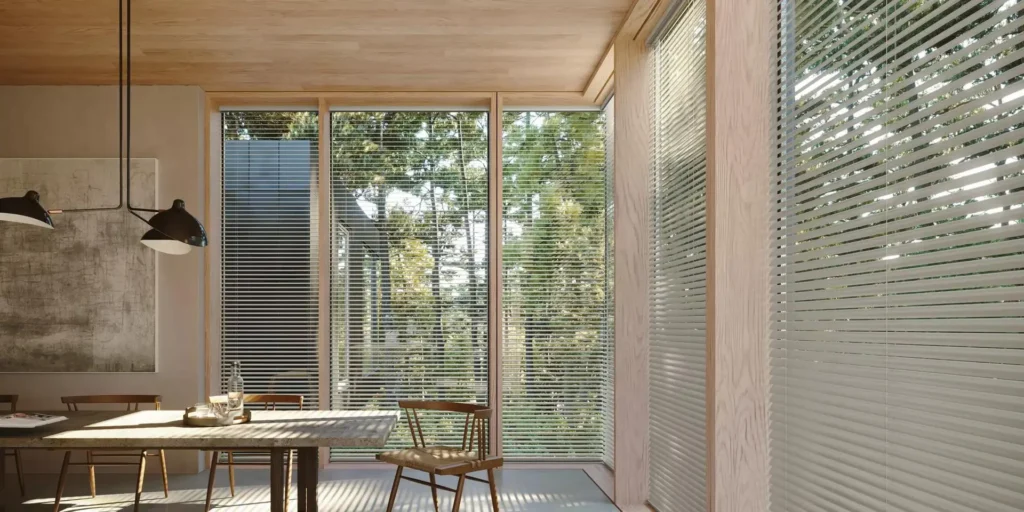
Metal blinds use lightweight horizontal aluminum slats that tilt precisely and stack compactly. Their narrow profiles, broad colour selection and durable baked finishes make them practical for offices, commercial spaces, kitchens and contemporary homes.
Why homeowners choose them
Four reasons this guide deserves careful consideration.
01
Compact profile
Thin slats stack tightly and preserve more window area when raised.
02
Precise adjustment
Tilt control provides fine management of glare, view and privacy.
03
Durable finish
Quality coatings resist fading and everyday wear.
04
Broad colour range
Choose neutrals, metallics, textures and accent colours.
How it works
How metal blinds are designed and built
Aluminum slats are supported by ladder cords and connected to a compact metal headrail containing lift and tilt hardware. Common slat sizes range from mini-blind proportions to wider 2-inch profiles. Options may include cordless lift, motorized tilt and decorative headrail finishes.
Compare before you choose
How this option differs from nearby alternatives.
Metal blinds are compared with faux wood blinds and roller shades. Choose metal blinds for slim slats, low weight and crisp control. Choose faux wood for a warmer wood-like appearance and moisture resistance. Choose roller shades for a softer, uninterrupted fabric plane.
Where it works beautifully
Consider the room, exposure, privacy needs and how often the treatment will be adjusted.
01
Home offices
Fine-tune glare and preserve a clean, professional aesthetic.
02
Commercial spaces
Use durable finishes and repeatable specifications across many windows.
03
Kitchens
Select easy-clean slats and compact hardware.
04
Modern interiors
Emphasize crisp lines, metallic finishes and minimal visual weight.
Questions, answered
Frequently asked questions
Clear, practical guidance based on the questions homeowners ask most often.
Do aluminum blinds bend?
Thin slats can crease if handled roughly. Quality alloys and proper operation reduce damage, but bent slats may need replacement.
Are metal blinds noisy?
They may make light contact sounds in moving air or when operated. Proper sizing and hold-down brackets can help on doors.
Do they provide blackout?
No. Closed slats reduce light but gaps and route holes remain.
Are they good for humid rooms?
Aluminum slats tolerate humidity well, but internal hardware and cords still require normal care.
How do I clean them?
Dust with a microfiber tool or wipe carefully with a damp cloth. Support slats to avoid bending.
Can they be motorized?
Selected products offer motorized tilt or complete automated control.
What slat width should I choose?
Narrow slats create a compact traditional mini-blind look. Wider slats improve view-through and feel more architectural.
Are they suitable for doors?
Yes, with proper clearance and optional hold-down brackets to limit movement.
Will the finish fade?
Quality baked finishes are durable, though intense UV exposure can change some colours over time.
Are metal blinds child safe?
Cordless systems are preferred. Any corded product must follow current Canadian safety requirements.
Care & longevity
Protect the materials and the mechanism.
Dust frequently, support slats during wiping and avoid bending them past their natural range. Keep the headrail free of debris and repair damaged ladders before slats become uneven.
Guidance made personal
Ready to choose with confidence?
Meet with The Blind Shop design experts to compare materials, control options and performance in your own space.