
Complete product guide
The Complete Faux Wood Blinds Buying Guide
Durable wood-look slats designed for moisture resistance, easy care and everyday value.
Understand the essentials
A closer look at faux wood blinds and the decisions that shape the result.
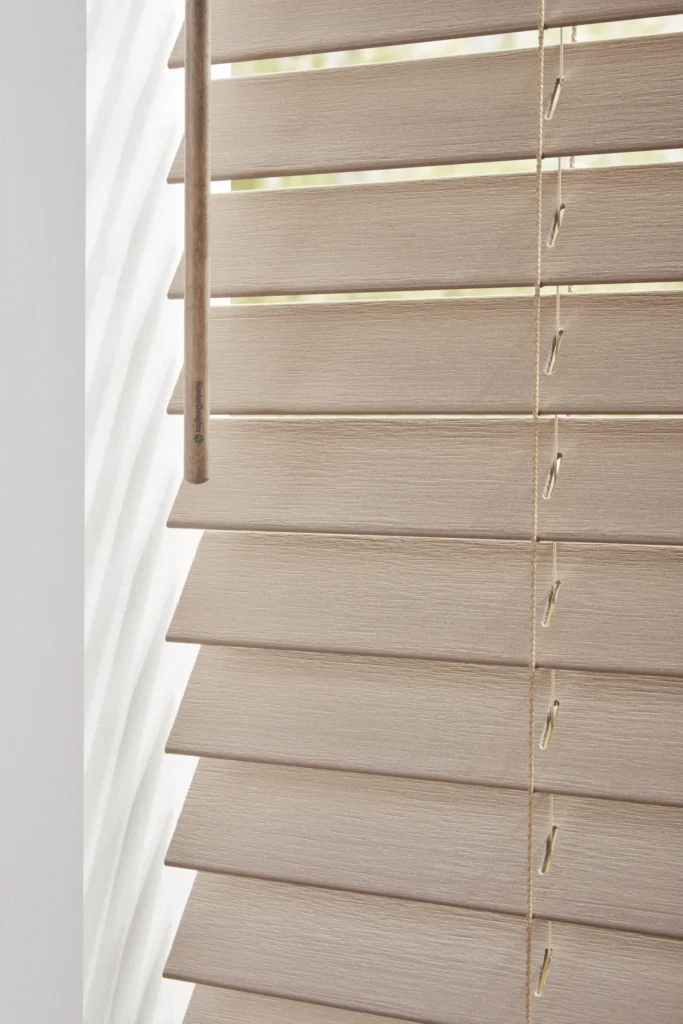
Faux wood blinds reproduce the look of painted or stained wood using composite, PVC or polymer slats. They offer adjustable tilt, strong privacy control and a surface that tolerates humidity and routine wiping better than real wood.
Why homeowners choose them
Four reasons this guide deserves careful consideration.
01
Moisture resistance
Suitable materials perform well in kitchens, bathrooms and high-humidity spaces.
02
Easy cleaning
Smooth slats can usually be wiped with a damp cloth.
03
Consistent finish
Colours and embossed grains remain uniform across multiple windows.
04
Practical durability
The slats resist many everyday marks, scratches and moisture concerns.
How it works
How faux wood blinds are designed and built
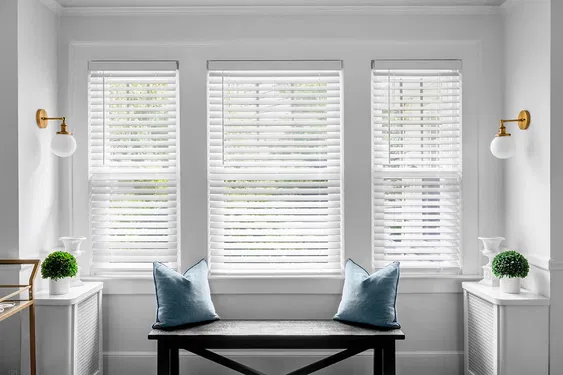
Faux wood slats are suspended beneath a reinforced headrail with lift and tilt mechanisms. Because composite slats are heavier than real wood, width limits and multiple-blind configurations are important. Valances and decorative tapes can complete the wood-like appearance.
Compare before you choose
How this option differs from nearby alternatives.
Faux wood blinds are compared with real wood blinds and shutters. Choose faux wood for moisture resistance and value. Choose real wood for authentic grain and lighter weight. Choose shutters for a permanent framed installation and more substantial architecture.
Where it works beautifully
Consider the room, exposure, privacy needs and how often the treatment will be adjusted.
01
Bathrooms
Use moisture-resistant slats where steam and splashes are common.
02
Kitchens
Choose an easy-wipe surface for active family spaces.
03
Rental properties
Benefit from durable materials and straightforward maintenance.
04
Bedrooms
Use adjustable slats for privacy and pair with another layer for stronger darkness.
Questions, answered
Frequently asked questions
Clear, practical guidance based on the questions homeowners ask most often.
Are faux wood blinds waterproof?
Many are moisture resistant, but the headrail, cords and internal parts should not be soaked. Follow the specific product guidance.
Are they heavier than real wood?
Yes, often significantly. Very wide windows may require two or more blinds to keep operation manageable.
Do they look like real wood?
Embossed textures and coordinated finishes can look convincing, especially in painted colours, though natural wood has more authentic variation.
Do they provide blackout?
No. Closed slats reduce light but do not eliminate gaps around the blind or through route holes.
Can faux wood blinds warp?
Quality products resist moisture, but extreme heat or unsupported width can still cause distortion.
How do I clean them?
Dust routinely and wipe with a damp cloth and mild approved cleaner. Dry the slats afterward.
Can they be motorized?
Motorized tilt is available in some collections. Full lift motorization is less common because of weight.
What slat size is best?
Two-inch slats are common, while 2½-inch slats create a broader view and more contemporary scale.
Are they good for patio doors?
They can be used on some doors, but weight, movement and handle clearance must be considered.
How long do they last?
A quality custom blind can last many years when sized correctly and operated without excessive force.
Care & longevity
Protect the materials and the mechanism.
Wipe slats regularly, support the bottom rail when cleaning and avoid forcing heavy blinds upward. Report bowing, frayed ladders or difficult lifting before the mechanism is damaged.
Guidance made personal
Ready to choose with confidence?
Meet with The Blind Shop design experts to compare materials, control options and performance in your own space.