
Complete product guide
The Complete Pleated Shades Buying Guide
Crisp, lightweight shades with compact stacking and versatile privacy options.
Understand the essentials
A closer look at pleated shades and the decisions that shape the result.
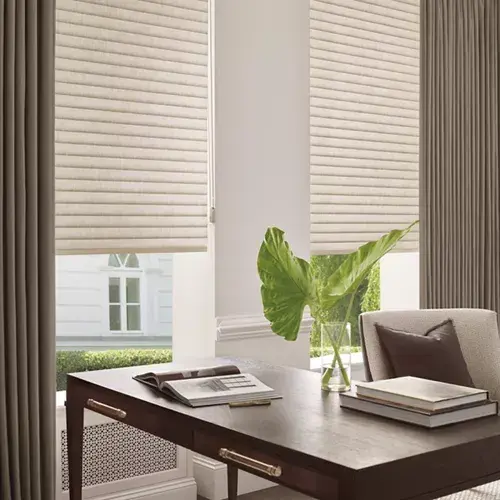
Pleated shades use a single layer of fabric folded into even pleats. They offer a clean, economical appearance, stack compactly at the top of the window and are available in light-filtering and room-darkening materials. Unlike cellular shades, the fabric does not form insulating air pockets.
Why homeowners choose them
Four reasons this guide deserves careful consideration.
01
Compact stack
The single-layer construction gathers neatly and preserves more of the glass when raised.
02
Clean folded texture
Crisp pleats add subtle dimension without a heavy or ornate appearance.
03
Flexible privacy
Choose sheer, light-filtering or room-darkening fabrics for different rooms.
04
Practical value
Pleated shades can deliver a custom look at an approachable price point.
How it works
How pleated shades are designed and built
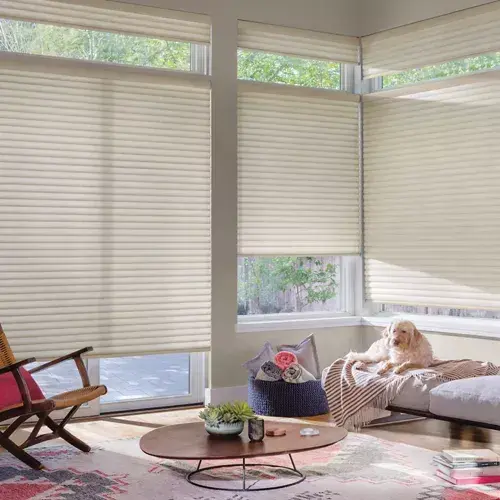
Fabric is permanently folded into horizontal pleats and connected to a headrail and bottom rail. Depending on the system, cords, cordless mechanisms or motorization raise and lower the shade. Optional liners improve privacy and darkness, while specialty configurations may include top-down bottom-up operation.
Compare before you choose
How this option differs from nearby alternatives.
Pleated shades are often compared with cellular shades and roller shades. Choose pleated shades for a crisp folded look and compact stack. Choose cellular shades when insulation is a major priority. Choose roller shades when you prefer a flat fabric panel and the broadest decorative-fabric selection.
Where it works beautifully
Consider the room, exposure, privacy needs and how often the treatment will be adjusted.
01
Living spaces
Add gentle texture while preserving daylight and an uncluttered window.
02
Bedrooms
Use lined or room-darkening fabrics where privacy and reduced light matter.
03
Home offices
Manage glare with a compact treatment that does not visually crowd the room.
04
Smaller windows
Take advantage of the light weight and tidy stacking profile.
Questions, answered
Frequently asked questions
Clear, practical guidance based on the questions homeowners ask most often.
Are pleated shades energy efficient?
They provide some protection from direct sunlight, but their single-layer construction generally insulates less than cellular shades.
How are pleated shades different from cellular shades?
Pleated shades use one folded fabric layer. Cellular shades join layers into honeycomb-shaped pockets that trap air and improve insulation.
Can pleated shades be room darkening?
Yes. Room-darkening fabrics or liners can block light through the material, although edge gaps may remain.
Can they operate top down and bottom up?
Many custom systems offer this option, allowing daylight from above while maintaining privacy below.
Are pleated shades suitable for wide windows?
They can be, within manufacturer size limits. Wider openings may require multiple shades or larger operating components.
Do the pleats lose their shape?
Quality fabrics are heat-set to retain their folds, but excessive moisture, rough handling or age can affect appearance.
How do I clean pleated shades?
Dust gently with a microfiber tool or low-suction brush attachment. Follow the fabric manufacturer’s spot-cleaning instructions.
Can pleated shades be motorized?
Selected systems can be motorized, particularly for larger or difficult-to-reach windows.
Are they child safe?
Cordless and motorized systems are preferred where children or pets are present.
What colours work best?
Light neutrals feel airy and reflect more visible light, while deeper colours add contrast and may show pleat definition more strongly.
Care & longevity
Protect the materials and the mechanism.
Raise and lower the shade smoothly, keep the pleats free of dust and avoid crushing or saturating the fabric. Address uneven stacking or rail alignment early so the folds continue to hang consistently.
Guidance made personal
Ready to choose with confidence?
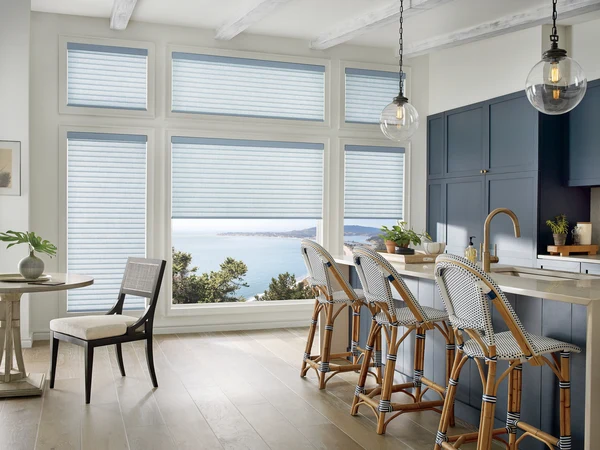
Meet with The Blind Shop design experts to compare materials, control options and performance in your own space.