
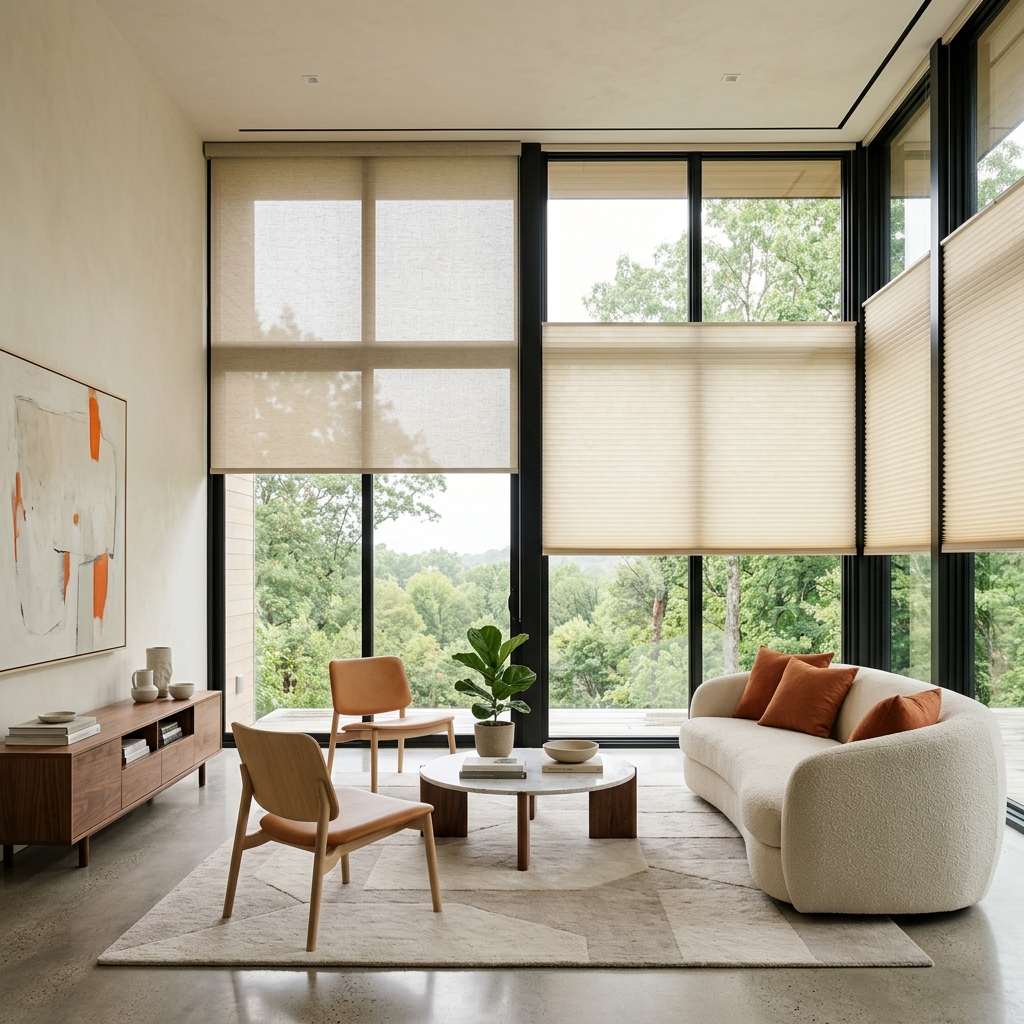
Complete product guide
The Complete Privacy & Light Control Buying Guide
A practical framework for balancing daylight, view, glare, privacy and darkness.
Understand the essentials
A closer look at privacy & light control and the decisions that shape the result.
Window coverings do several jobs at once: they soften daylight, reduce glare, preserve a view, create privacy and sometimes darken a room. The right solution depends on time of day, window exposure, interior lighting and how much light can enter around the treatment.
Why homeowners choose them
Four reasons this guide deserves careful consideration.
01
Daytime privacy
Use light direction and fabric openness to reduce visibility from outside.
02
Nighttime privacy
Choose opaque materials or closeable vanes when interior lights are on.
03
Glare control
Manage direct sun without making the room unnecessarily dark.
04
Room darkening
Combine suitable fabric, overlap and layering to reduce edge light.
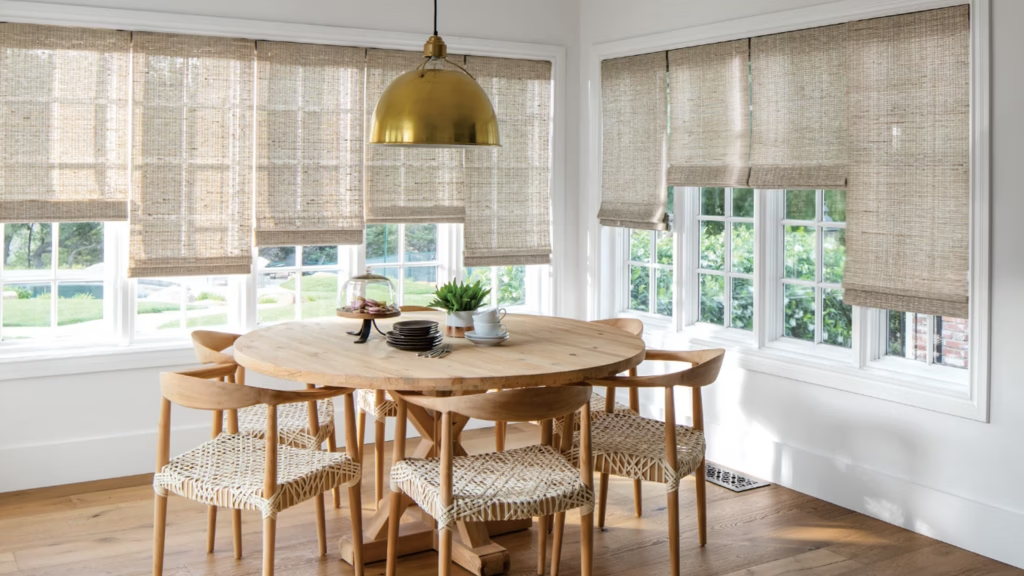
How it works
How privacy & light control are designed and built
Performance comes from three elements working together: the material, the operating design and the fit. A fabric may block light through its surface while gaps remain at the sides. Adjustable products such as blinds, shutters and sheer shades add another level of control by changing angle rather than simply opening or closing.
Compare before you choose
How this option differs from nearby alternatives.
Light-filtering, solar and room-darkening products solve different problems. Light-filtering materials soften daylight. Solar fabrics preserve daytime view while reducing glare. Room-darkening materials block light through the fabric. True near-blackout results usually require channels, deep overlap or layered treatments.
Where it works beautifully
Consider the room, exposure, privacy needs and how often the treatment will be adjusted.
01
Street-facing rooms
Prioritize changing privacy conditions from daytime to evening.
02
Bedrooms
Plan for edge light, early sunrise and personal sleep preferences.
03
Media rooms
Reduce glare and reflections with darkening fabrics and wider overlap.
04
Home offices
Preserve useful daylight while controlling direct sun on screens.
Questions, answered
Frequently asked questions
Clear, practical guidance based on the questions homeowners ask most often.
What is the difference between privacy and blackout?
Privacy limits visibility through a treatment. Blackout refers to blocking light, and complete darkness also depends on edge gaps and installation.
Can people see through solar shades at night?
Yes, often. When interior light is brighter than outside, visibility can reverse and the shade may provide limited privacy.
Does light-filtering fabric provide privacy?
It may provide good daytime or moderate privacy, but silhouettes can be visible at night depending on colour and lighting.
Why is there light around blackout shades?
The fabric blocks light, but normal inside-mounted shades leave small side and top gaps.
How can I make a bedroom darker?
Use room-darkening fabric, outside mounting, generous overlap, side channels or layered drapery.
Do dark colours reduce glare?
Dark solar fabrics can improve outward view and reduce visible glare, while light colours reflect more light.
Which products preserve the best view?
Solar shades and open-vane sheer products generally preserve view better than opaque shades.
Can one treatment provide both view and nighttime privacy?
Adjustable or layered treatments can, but a single open-weave fabric usually cannot provide both simultaneously.
Does window direction matter?
Yes. South- and west-facing windows often receive stronger direct sun, while north-facing rooms usually have softer light.
Should all windows use the same fabric?
Consistent appearance is possible, but different exposures and privacy needs may justify different densities or linings.
Care & longevity
Protect the materials and the mechanism.
Reassess privacy and glare at different times of day, not only during the consultation. Keep adjustable products aligned and clean so their intended light-control performance is maintained.
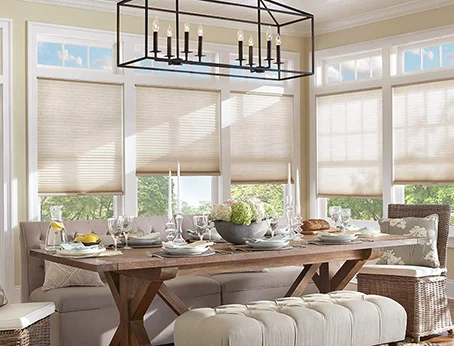
Guidance made personal
Ready to choose with confidence?
Meet with The Blind Shop design experts to compare materials, control options and performance in your own space.