
Complete product guide
The Complete Vertical Blinds Buying Guide
Practical rotating vanes for patio doors, wide windows and easy access.
Understand the essentials
A closer look at vertical blinds and the decisions that shape the result.
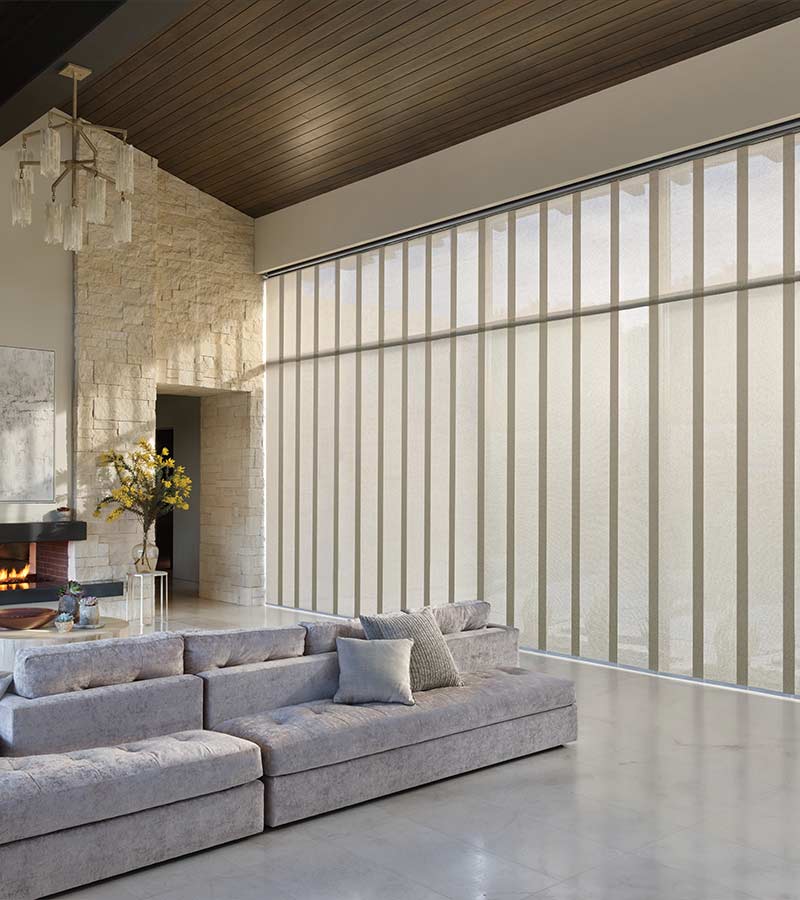
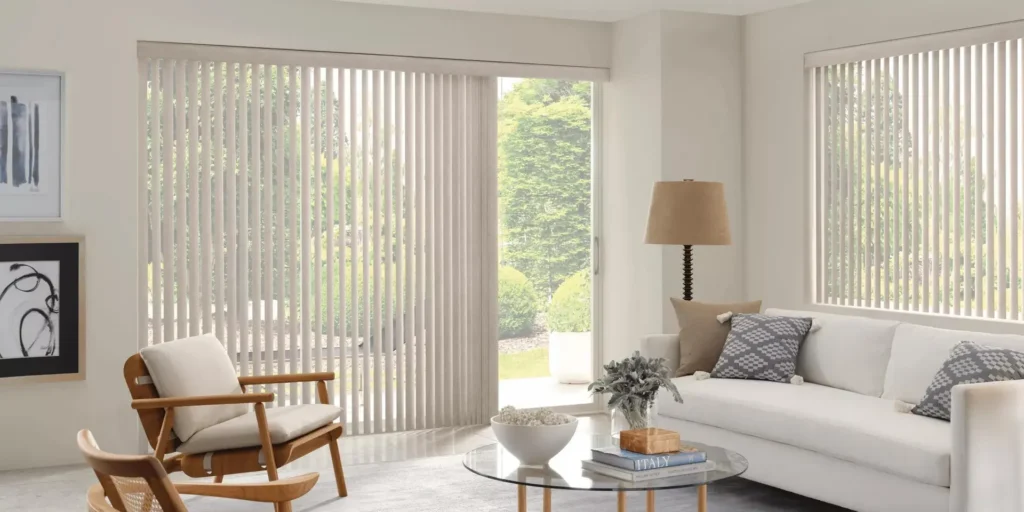
Vertical blinds use individual hanging vanes that rotate for light and privacy and traverse sideways to open the full width. Their movement follows the natural use of sliding doors, making them especially practical for patios, large windows and commercial spaces.
Why homeowners choose them
Four reasons this guide deserves careful consideration.
01
Ideal for wide openings
Sideways stacking suits broad windows and sliding glass doors.
02
Easy access
Traverse the vanes away from the active door panel.
03
Adjustable light
Rotate vanes from open view to filtered light or privacy.
04
Replaceable components
Individual vanes can often be replaced if damaged.
How it works
How vertical blinds are designed and built
Fabric, vinyl or aluminum vanes hang from carriers inside a horizontal track. A wand, cord system or motor rotates and traverses the vanes. Stack direction can be left, right, centre split or reverse draw, depending on how the door or window is used.
Compare before you choose
How this option differs from nearby alternatives.
Vertical blinds are compared with sliding panels and roller shades. Choose vertical blinds for adjustable vanes and frequent door access. Choose panel tracks for wider fabric panels and a more contemporary look. Choose multiple roller shades for a cleaner top-mounted appearance.
Where it works beautifully
Consider the room, exposure, privacy needs and how often the treatment will be adjusted.
01
Patio doors
Match the stack direction to the active sliding panel.
02
Wide living-room windows
Cover broad spans with adjustable view and privacy.
03
Commercial offices
Use durable tracks and replaceable vanes for practical maintenance.
04
Rental properties
Select easy-clean materials and straightforward replacement parts.
Questions, answered
Frequently asked questions
Clear, practical guidance based on the questions homeowners ask most often.
Are vertical blinds outdated?
Modern fabrics, wider vanes and streamlined tracks can create a clean current look, especially on large doors.
Which way should they stack?
The stack should clear the active door or preferred view. Left, right, centre and split options may be available.
Do vertical blinds provide blackout?
Room-darkening vanes reduce light, but gaps between vanes and around the perimeter prevent complete darkness.
Are fabric or vinyl vanes better?
Fabric offers softness and texture. Vinyl is easier to wipe and can provide stronger privacy.
Can the vanes be replaced?
Often, yes. Replacement availability depends on the age, colour and manufacturer.
How do I clean them?
Dust fabric vanes or wipe approved vinyl and aluminum surfaces. Clean the track and carriers carefully.
Can they be motorized?
Yes. Motorized traverse and rotation are available in selected systems.
Do they work on angled windows?
Specialty tracks may address some angles, but standard vertical systems are designed for level horizontal installations.
How much space does the stack use?
Stack width depends on vane width, quantity and track design. It should be considered during measuring so the door remains accessible.
Are vertical blinds child safe?
Wand-control and motorized systems reduce loose cords. All products should comply with current safety rules.
Care & longevity
Protect the materials and the mechanism.
Keep the track clean, rotate vanes open before traversing and avoid pulling individual vanes by hand. Replace damaged carriers or hangers promptly to preserve smooth movement.
Guidance made personal
Ready to choose with confidence?
Meet with The Blind Shop design experts to compare materials, control options and performance in your own space.