
Complete product guide
The Complete Wood Blinds Buying Guide
Genuine hardwood slats with natural warmth, precise tilt and classic design flexibility.
Understand the essentials
A closer look at wood blinds and the decisions that shape the result.
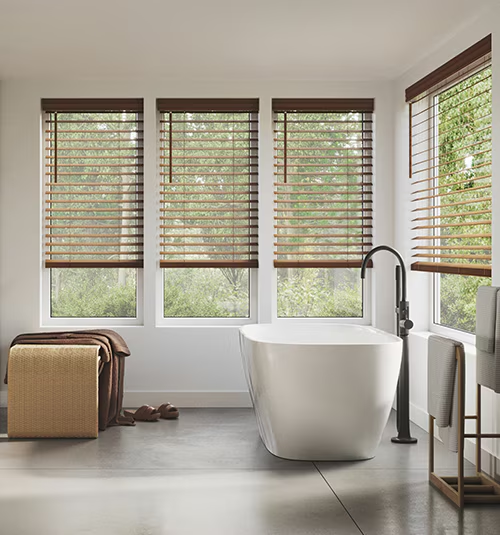
Wood blinds use horizontal hardwood slats that tilt for light and privacy and lift to clear the window. Stains reveal natural grain while painted finishes coordinate with trim and cabinetry. Their warmth and dimensionality work especially well in traditional, transitional and organic interiors.
Why homeowners choose them
Four reasons this guide deserves careful consideration.
01
Authentic material
Real wood grain and tonal variation create depth that synthetic products cannot fully replicate.
02
Precise tilt control
Adjust slat angle throughout the day without fully raising the blind.
03
Finish flexibility
Choose stains, paints, decorative tapes and valance profiles.
04
Timeless appearance
Wood blinds coordinate naturally with floors, furniture and millwork.
How it works
How wood blinds are designed and built
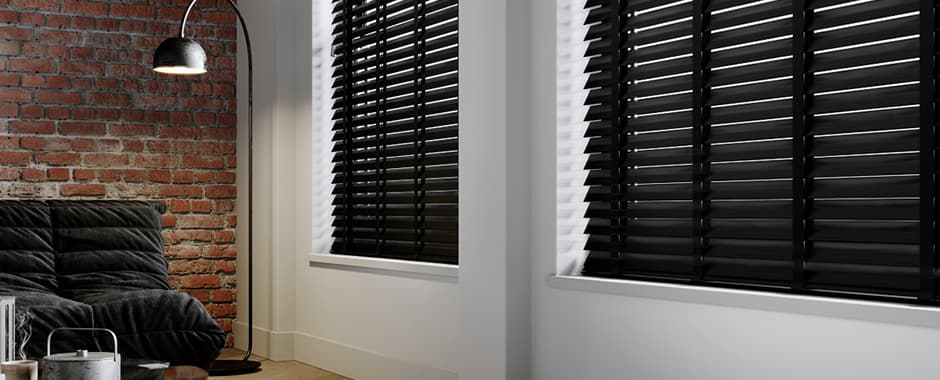
Finished hardwood slats are laddered together beneath a headrail containing the lift and tilt mechanisms. Common slat sizes include 2-inch and 2½-inch profiles. Decorative valances conceal the headrail, while route-hole and no-hole options influence privacy and light leakage.
Compare before you choose
How this option differs from nearby alternatives.
Wood blinds are often compared with faux wood blinds and shutters. Choose wood blinds for authentic grain and lower weight. Choose faux wood for moisture resistance and easier cleaning. Choose shutters for a permanent framed treatment with hinged panels.
Where it works beautifully
Consider the room, exposure, privacy needs and how often the treatment will be adjusted.
01
Living rooms
Coordinate with wood furniture and create adjustable daytime light.
02
Dining rooms
Add warmth and tailored horizontal lines.
03
Home offices
Control monitor glare while retaining a professional appearance.
04
Low-humidity bedrooms
Use slat tilt for privacy and pair with drapery where greater darkness is needed.
Questions, answered
Frequently asked questions
Clear, practical guidance based on the questions homeowners ask most often.
Are wood blinds suitable for bathrooms?
Real wood is generally not recommended for consistently humid rooms because moisture can warp or damage the finish.
What slat size is best?
Two-inch slats are versatile. Two-and-a-half-inch slats provide a broader view and stronger architectural scale.
Do wood blinds provide blackout?
No. Closed slats reduce light, but route holes and gaps around and between slats allow some light through.
Are wood blinds heavy?
They are usually lighter than comparable faux wood blinds, but very wide blinds can still be difficult to lift.
Can they be motorized?
Motorized tilt is available in selected systems. Full motorized lift depends on manufacturer and size.
How do I clean wood blinds?
Dust regularly and wipe with a barely damp cloth approved for the finish. Do not soak the slats.
Will the colour vary?
Natural grain and stain absorption create expected variation. Painted finishes are generally more uniform.
Can slats warp?
Quality wood is kiln-dried and finished, but excess humidity, heat or water can still cause movement.
Are decorative tapes available?
Many collections offer cloth tapes that cover route holes and add contrast or coordination.
How long do wood blinds last?
With proper care and appropriate room placement, quality custom wood blinds can provide many years of service.
Care & longevity
Protect the materials and the mechanism.
Dust both sides of the slats, avoid moisture and direct heat, and lift the blind fully before opening a window. Service cords, ladders or tilt components if operation becomes uneven.
Guidance made personal
Ready to choose with confidence?
Meet with The Blind Shop design experts to compare materials, control options and performance in your own space.